The Ledger Behind the Falsetto: How RSO Records Engineered the Bee Gees' American Moment

Photo by Photo by Francis Bouffard on Unsplash on Unsplash
You can picture the mirror ball. You can hum the chorus. But if you want to understand how Bee Gees fever went from a few turntables to a national condition, you have to look past the stage lights and into the label office.
Atco First, RSO Forever
Long before Saturday Night Fever turned the Bee Gees into a household name in every American suburb, the brothers had a home in the States on Atco, Atlantic Records' pop-minded imprint. That relationship gave them early chart presence with songs like Massachusetts and I've Gotta Get a Message to You, but the early 1970s were a different story. The hits slowed. The sound drifted. The business side of the equation started to matter as much as the harmonies.
Enter Robert Stigwood. The manager, producer, and impresario had been in the Bee Gees' orbit since the late 1960s, and in 1973 he launched RSO Records as a vehicle for the acts he believed in. RSO wasn't some faceless conglomerate. It was an extension of Stigwood's instinct for spectacle and his willingness to bet on his own roster. The label became a kind of creative headquarters — part management office, part marketing engine, part family business with a global reach.
For the Bee Gees, that meant more than a logo on a spine. It meant a team that understood how to build a comeback in stages: first re-establish the songwriting, then find the right sound, then put the full weight of a label behind the moment when it arrived.
The Soundtrack as a Retail Event
When Saturday Night Fever landed in American stores in late 1977, it wasn't sold as a mere movie soundtrack. It was packaged as an invitation. The double LP came in a gatefold sleeve, loaded with movie stills and the kind of glossy disco sheen that made a record feel like a ticket to somewhere brighter. The Bee Gees weren't just on the cover; they were the engine under the hood.
The label strategy was canny. How Deep Is Your Love arrived first, easing radio listeners back into the group's romantic side before the harder pulse of Stayin' Alive and Night Fever took over. By the time the film hit theaters, the soundtrack was already a presence in record racks, on FM playlists, and in the cultural conversation. RSO wasn't just releasing an album; it was choreographing a season.
And American record buyers responded like they'd been waiting for permission. Retailers who had ordered conservatively were calling distributors within days. Shopping-mall record stores, the kind with shrink-wrapped rows and listening booths near the front, became staging grounds for a stampede. The soundtrack wasn't a souvenir. It was a lifestyle purchase.
Radio, Distribution, and the Great Vinyl Scramble
A hit song is one thing. A national phenomenon is a supply-chain problem. RSO and its distribution partners had to keep pressing plants humming while radio programmers kept adding tracks. Top 40 stations leaned on the singles; album-rock stations found room for the moodier cuts; disco DJs had their own favorites. The label fed each lane without letting the whole thing feel like a corporate mandate.
That balance was delicate. The Bee Gees' sound was everywhere, and the label's job was to make sure everywhere didn't become too much. For a while, it worked beautifully. The soundtrack camped out at the top of the Billboard album chart. Singles stacked up. Andy Gibb, another RSO act and the brothers' youngest sibling, had his own run of hits. The label's roster suddenly looked less like a quirky boutique and more like a hit factory with a family tree.
In warehouses and back rooms, the fever was measured in boxes, not beats. Truck drivers, pressing-plant crews, and store clerks became part of the story. Fans rarely see that machinery, but it is the reason a song can go from a car radio to a kitchen table to a national memory without missing a step.
The Fragile Alliance Between Art and Commerce
Here's the part that gets lost in the glitter: the Bee Gees wrote the songs, but RSO built the scaffolding. The label's marketing muscle didn't create the falsetto, the melody, or the ache in How Deep Is Your Love. It did, however, make sure those things reached the widest possible audience at the exact right moment.
That alliance can be beautiful, and it can be brittle. The same machine that amplified the brothers also made them a target when the cultural winds shifted. The disco backlash of the late 1970s was loud, sometimes ugly, and often aimed at the very ubiquity that had made the Bee Gees millionaires many times over. A label can turn a moment into a movement, but it can't guarantee the movement won't become a monolith.
What RSO understood — and what makes its Fever-era run so fascinating to revisit — is that art and commerce don't have to be enemies. They can be dance partners. Sometimes the partnership produces something lasting. Sometimes it produces overexposure. Often it produces both at once.
What the Fever Still Teaches Fans
Nearly five decades later, the Bee Gees' catalog lives in a very different landscape: streaming playlists, deluxe reissues, vinyl revival bins, and family car rides where the next generation discovers Stayin' Alive without ever seeing the movie. The label story matters because it explains how a sound became a shared American reference point.
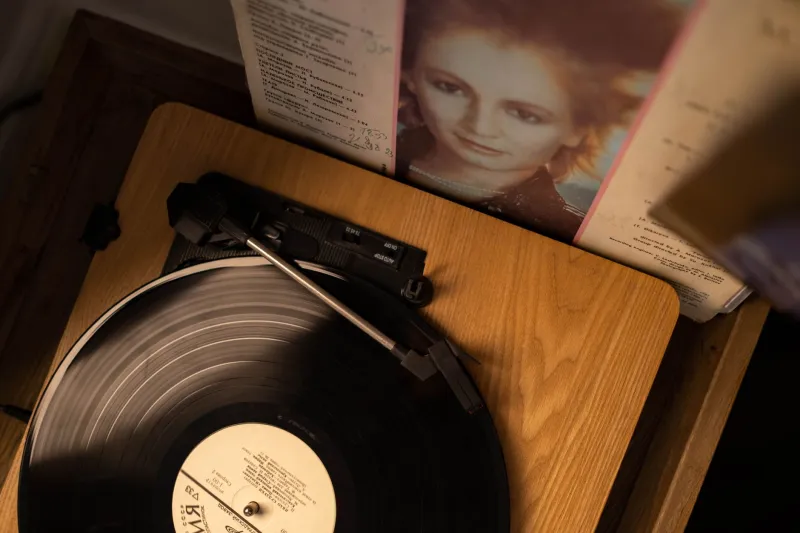
It also reminds us that a great record is never just a record. It's a decision — to press more copies, to call one more radio station, to put the band's faces on a gatefold sleeve, to trust that the songs can carry the weight of the push. RSO rode the lightning. The Bee Gees made the lightning worth riding.
And that's the part fans still feel when the needle drops or the stream begins: the songs outlast the machinery, but the machinery helped them get here.