The Man Who Never Let the Needle Lift: A Boston DJ's 45-Year Love Letter to the Bee Gees
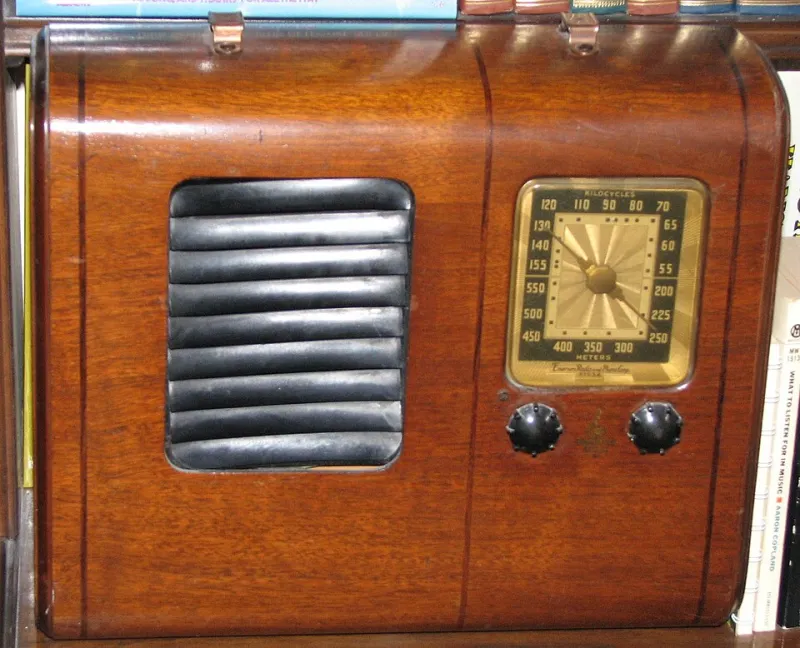
Photo: Joe Haupt from USA, CC BY 2.0, via Wikimedia Commons
In the spring of 1980, radio stations across the United States were doing something almost unthinkable just a year earlier: pulling the Bee Gees from rotation. The disco backlash had arrived with a fury, and in market after market — New York, Dallas, Los Angeles — the Gibbs' records were quietly shelved, replaced by new wave and heartland rock.
Not in Boston. Not on WZLX's weekend overnights, where a young DJ named Charlie Doran made a decision that would define his entire career.
"I got a memo saying to drop the disco stuff," Doran, now 74, recalls with a chuckle from his home outside Salem. "I read it, I nodded, and then I played 'Nights on Broadway' at two in the morning. Nobody called to complain. A lot of people called to say thanks."
The Backlash That Never Reached Beantown
Doran wasn't alone, but he was stubborn in a way that mattered. Working the overnight shift meant he had freedom the daytime programmers didn't, and he used it to keep a thread of Bee Gees material alive through the leanest years of 1980 through 1987 — the era when mentioning the band's name in certain circles got you laughed off the request line.
Station archives from the period tell a fascinating story. A survey sheet from WZLX in 1983 shows "Stayin' Alive" still appearing in the overnight rotation, sandwiched between The Police and Bob Seger. In most of the country, that was heresy. In Doran's hands, it was just good programming.
"People forget," he says, "that 'Stayin' Alive' was never just a disco record in Boston. It was a walking-tempo record. The hospitals used it for CPR training. The cops had it in their patrol cars. That song had jobs. You don't retire a song with a job."
More Than a Dance Floor Anthem
Doran's point about the song's second life is backed by a remarkable list of American institutions. The American Heart Association famously adopted the track's 103 beats per minute as the ideal rhythm for chest compressions, meaning generations of EMTs and CPR students have literally saved lives to the Gibbs' falsetto. Construction crews, joggers, and aerobics instructors across the country adopted it for the same reason — the tempo works.
By the late 1980s, the tide had turned everywhere, not just on Doran's overnight show. Classic hits formats began launching across the US dial, and programmers discovered something the backlash crowd had missed: the Bee Gees catalog had depth. "Jive Talkin'," "You Should Be Dancing," "How Deep Is Your Love" — these weren't novelties. They were craft.
"When the classic hits format came in, I didn't have to fight anymore," Doran says. "The memo came back around in '89 asking if we had any Bee Gees. I just handed them my old playlist."
The Quiet Guardians of the Catalog
Doran is quick to spread the credit. He names a whole generation of American radio lifers who kept the flame burning through the lean years — the program director in Cleveland who slipped "Tragedy" into Sunday programming, the Houston DJ who leaned hard into the pre-disco balladry of "How Can You Mend a Broken Heart." None of them made headlines. All of them made a difference.
That's the quiet truth about the Bee Gees' American radio story: the airplay never actually stopped. It just moved to the overnight shifts, the Sunday request hours, the deep cuts and B-sides, until the culture was ready to hear it loud again.
Forty-Five Years and Still Stayin' Alive
Today, Doran is long retired from full-time work, but he still hosts a Sunday night classic hits program on a Boston-area station, and yes — the Bee Gees are a weekly fixture. He estimates he's played "Stayin' Alive" on the air more than 4,000 times.
"People ask me if I get tired of it," he laughs. "I ask them if they get tired of the sunrise. That song walks in and everybody's twenty-two again, everybody's in the movies, everybody's fine. My job was just to keep the light on until people remembered they loved it."
Forty-five years later, in living rooms, gyms, ambulances, and yes — on Boston radio — the brothers Gibb are still very much on the air. Thanks to stubborn folks like Charlie Doran, they never really left.


